D Acoustics is a Chennai-based auditorium acoustic consultant specializing in the acoustic design, treatment, and turnkey execution of auditoriums, lecture halls, and performance venues across India. From reverberation control to sound reinforcement planning, we engineer auditoriums where every seat hears clear, balanced sound.
Why Auditorium Acoustics Matters
An auditorium with weak acoustic design suffers from echo, unclear speech, uneven sound distribution, and poor experience in the back rows — no matter how good the architecture or AV system is. Acoustic treatment has to be planned early, alongside civil and interior design, to avoid costly retrofits later.
Our Auditorium Acoustic Services
Reverberation time (RT60) analysis and control, wall and ceiling acoustic panel design, stage and proscenium acoustics, sound reinforcement (PA) system integration, noise isolation from HVAC and external sources, and acoustic material specification for auditoriums of any size — from 100-seat lecture halls to 1000+ seat convention auditoriums.
Case Study
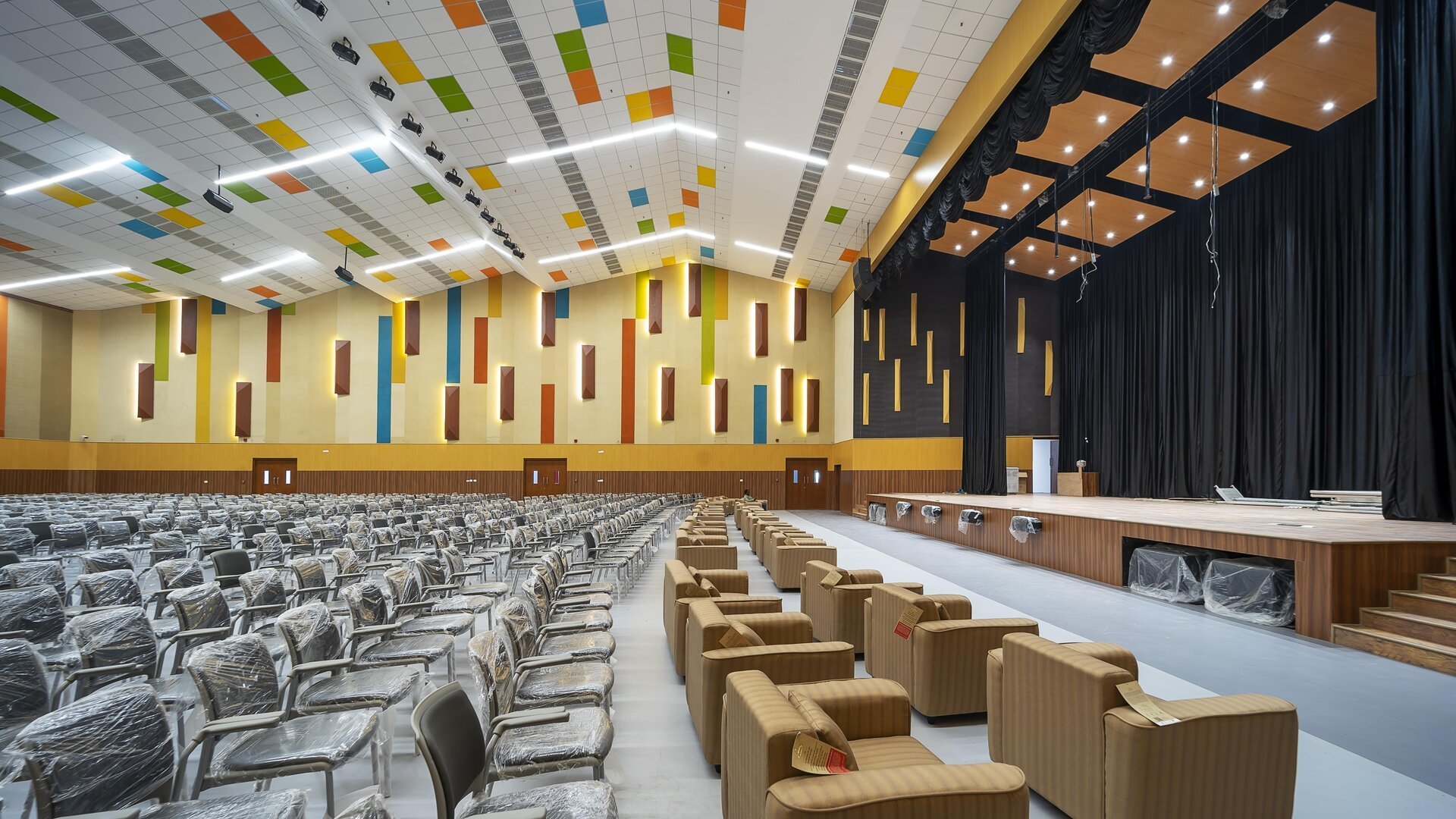
SRM Amaravathi partnered with D Acoustics to engineer an auditorium where every seat delivers clear, balanced sound — integrating architectural finishes, panel placement, and modal control for performances, lectures, and large gatherings.
Frequently Asked
Cost depends on auditorium size, seating capacity, existing structure, and material choice. We provide a detailed acoustic report and BOQ after a site assessment.
Yes. We regularly retrofit existing auditoriums with wall/ceiling panels, diffusers, and absorptive treatment to correct echo and speech clarity issues.
Yes — D Acoustics offers full acoustic consultancy plus turnkey execution, so the design we specify is the one that gets built.
Understanding the Basics
Auditorium acoustics is the science of controlling how sound behaves inside a large enclosed space — how it reflects, absorbs, and travels from the stage or speaker to every seat in the room. Good auditorium acoustics ensures speech stays clear, music sounds balanced, and there is no distracting echo or dead zones where sound drops out.
Three factors define auditorium acoustic quality:
How We Work
We study the auditorium's dimensions, intended use (lectures, performances, or mixed use), existing structure, and noise sources — both internal (HVAC) and external (traffic, adjacent rooms).
Using RT60 calculations and acoustic simulation, we predict how sound will behave in the space before any construction or treatment begins.
We specify absorptive panels, diffusers, and finishes matched to the room's size and purpose — balancing acoustic performance with architectural design.
As a turnkey provider, we install the specified treatment ourselves or supervise contractors to ensure the built result matches the acoustic design.
Post-installation, we measure actual RT60 and speech intelligibility to confirm the auditorium performs as designed.
Scale Matters
| Venue Type | Typical Capacity | Primary Acoustic Focus |
|---|---|---|
| Lecture Hall / Classroom | 50–150 seats | Speech clarity, minimal reverberation, HVAC noise control |
| Mid-Size Auditorium | 150–500 seats | Balanced speech and AV/music playback, even coverage |
| Large Convention Auditorium | 500–1500+ seats | Sound reinforcement integration, modal control, back-row clarity |
| Performing Arts / Concert Hall | Varies | Natural acoustics, warmth, dynamic range for live music |
Talk to our acoustic consultants before construction begins — it's the cheapest stage to get it right.
Contact Us